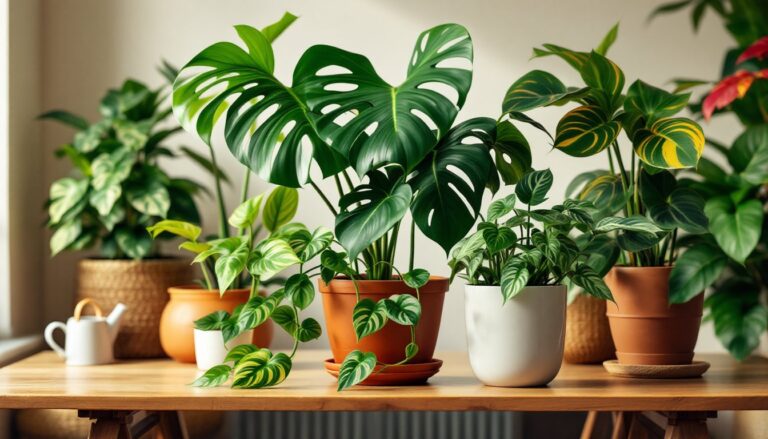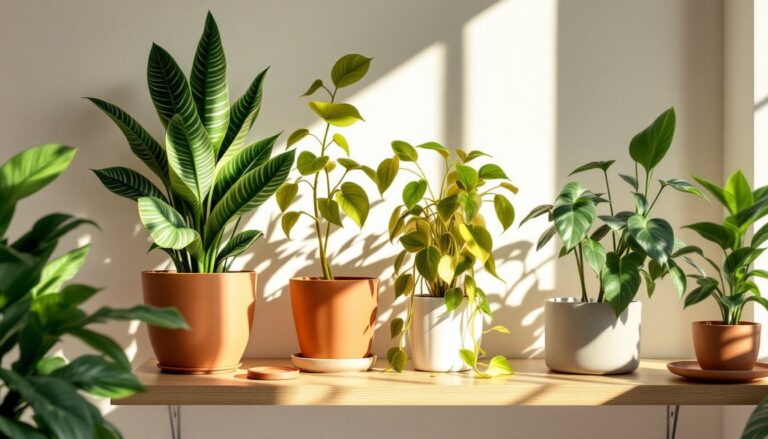
Big-leafed plants aren’t just about adding green to a corner, they’re architectural elements that completely shift how a room feels. A single Monstera or Bird of Paradise can anchor an entire wall, soften hard angles, and even improve air quality in a way that smaller plants can’t match. If you’re looking to make a visual impact without knocking down walls or repainting, large foliage plants deliver dramatic results with relatively low skill requirements. They’re also forgiving: most thrive on benign neglect as long as you nail the basics of light, water, and drainage.
Table of Contents
ToggleKey Takeaways
- Big leaf house plants function as architectural elements that soften hard angles, improve air quality, and create dramatic visual impact without requiring renovation skills.
- Top varieties like Monstera Deliciosa, Fiddle Leaf Fig, and Bird of Paradise offer distinctive aesthetics—from Swiss cheese perforations to violin-shaped leaves—each with specific light and watering needs.
- Overwatering is the most common mistake with big leaf house plants; check soil 2-3 inches deep and ensure every pot has drainage holes to prevent root rot.
- Large foliage plants scale perfectly in modern homes with high ceilings and open floor plans, reducing the need for multiple small pots and creating vertical interest effortlessly.
- Monthly dust removal with a damp cloth, consistent bright indirect light, and monthly feeding during growing season keep big leaf plants thriving with minimal maintenance.
- Strategic placement of statement plants in corners, along walls, or as focal points maximizes their design impact while complementary neutral planters let the foliage be the true star of the room.
Why Big Leaf House Plants Are Perfect for Modern Homes
Modern interiors tend toward clean lines, neutral palettes, and open floor plans, all of which can feel stark without the right softening elements. Big leaf house plants solve that problem by introducing organic texture and vertical interest without cluttering surfaces or requiring custom built-ins.
Large leaves create bold shadows and movement as sunlight shifts throughout the day, adding a dynamic quality that static decor can’t replicate. They also have greater surface area for photosynthesis, which translates to more effective air filtration. While a single pothos vine is nice, a Bird of Paradise with 18-inch leaves will process significantly more CO₂ and volatile organic compounds.
From a practical standpoint, statement plants reduce the number of smaller pots you need to manage. One well-placed Fiddle Leaf Fig beats a cluster of six-inch nursery pots that need constant rearranging. That’s less watering, less fertilizing, and fewer dead leaves to sweep up.
Big-leafed plants also scale well in rooms with high ceilings or oversized furniture. A 6-foot Monstera won’t look out of place next to a sectional sofa or under a 10-foot ceiling, whereas smaller plants get visually lost. If you’re working with a loft, great room, or open-concept layout, you need greenery that holds its own against the architecture.
Top Big Leaf House Plants to Elevate Your Interior Design
Monstera Deliciosa: The Swiss Cheese Plant
The Monstera deliciosa is the workhorse of big-leaf plants. Mature leaves can reach 2 to 3 feet across with dramatic splits and perforations that give it the “Swiss cheese” nickname. These fenestrations aren’t just decorative, they help the plant withstand wind in its native rainforest habitat.
Monsteras are climbing plants in the wild, so indoors they benefit from a moss pole or trellis for support. Without it, stems can flop and sprawl, taking up more floor space than planned. Expect growth of 1 to 2 feet per year under good conditions: bright, indirect light and consistent moisture.
Watering is straightforward, let the top 2 inches of soil dry between waterings. Overwatering causes yellowing leaves and root rot, especially in dense potting mix. Use a well-draining blend with perlite or orchid bark to keep roots oxygenated. Many indoor tropical house specimens thrive in the same moisture range.
Safety note: Monstera leaves contain calcium oxalate crystals, which are toxic to cats and dogs. Keep them out of reach if you have pets that chew plants.
Fiddle Leaf Fig: A Designer Favorite
The Ficus lyrata, or Fiddle Leaf Fig, has become ubiquitous in design magazines for a reason, its large, violin-shaped leaves (up to 15 inches long) have a sculptural quality that reads as high-end even in budget spaces.
Fiddles are notoriously fussy, but most problems trace back to inconsistent watering or poor drainage. They prefer to dry out slightly between waterings: soggy soil leads to brown spots and leaf drop. A moisture meter takes the guesswork out if you’re not confident reading soil by touch.
Light is critical. Place them within 3 to 5 feet of an east- or west-facing window for best results. South-facing works if filtered by sheer curtains, too much direct sun scorches leaves, while too little causes leggy growth. Rotate the plant a quarter-turn every week to prevent lopsided development.
Fiddles don’t love being moved. Once you find a good spot, leave it there. Even shifting a few feet can trigger stress-related leaf drop. If you’re renting or rearrange furniture often, consider a plant with a more easygoing temperament.
Bird of Paradise: Tropical Drama Indoors
The Strelitzia reginae (Bird of Paradise) brings tropical scale without requiring a greenhouse. Mature plants produce paddle-shaped leaves that can stretch 18 inches long and 6 inches wide, growing from tall, upright stalks.
Unlike Monstera or Fiddle Leaf, Bird of Paradise tolerates, and even appreciates, some direct sunlight. A south-facing window is ideal. With enough light (and maturity), it may produce its signature orange-and-blue flowers, though blooming indoors is rare and typically requires plants at least 5 years old.
These plants are heavy feeders. During the growing season (spring through early fall), fertilize monthly with a balanced liquid fertilizer diluted to half strength. In winter, cut back to every 6 to 8 weeks. Overfertilizing causes salt buildup in soil, which leads to crispy brown leaf edges.
Bird of Paradise doesn’t mind being slightly rootbound, but once roots start circling the drainage holes, it’s time to repot into a container 2 to 4 inches larger in diameter. Use a heavy ceramic or terracotta pot, these plants grow top-heavy and will tip over in lightweight plastic planters.
Essential Care Tips for Thriving Big Leaf Plants
Watering: The most common killer of large foliage plants is overwatering. Big leaves lose moisture through transpiration, but that doesn’t mean they need daily drinks. Check soil moisture 2 to 3 inches down before watering. If it’s still damp, wait.
Drainage is non-negotiable. Every pot needs drainage holes, and saucers should be emptied within 15 minutes of watering to prevent roots from sitting in standing water. If you’re using a decorative cachepot without drainage, either drill holes or lift the plant out to water in a sink, then return it once excess water has drained.
Light Requirements: Most tropical big leaf plants hail from rainforest understories, where they receive filtered light rather than full sun. Indoors, that translates to bright, indirect light, near a window but not in the direct beam.
If leaves start turning pale or yellowish, the plant may be getting too much light. If new growth is small or leggy, it’s not getting enough. A light meter app on your phone (many are free) can help you measure foot-candles if you want precision, but visual cues work fine for most DIYers.
Humidity and Dust: Large leaves collect dust, which blocks light and clogs stomata (leaf pores). Wipe them down monthly with a damp microfiber cloth. Skip the leaf shine products, they’re unnecessary and can interfere with photosynthesis.
Most big-leaf tropicals prefer humidity above 40%, which is higher than typical indoor air in winter. A small humidifier near the plant helps, or group multiple plants together to create a microclimate. Misting is largely ineffective, it raises humidity for only a few minutes and can encourage fungal issues if done excessively.
Fertilizing: During active growth (spring and summer), feed once a month with a balanced liquid fertilizer (10-10-10 or 20-20-20) diluted to half the package recommendation. Big-leaf plants aren’t heavy feeders, and over-fertilizing causes more problems than under-fertilizing. In fall and winter, when growth slows, skip fertilizer entirely.
Pest Watch: Large leaves attract spider mites, mealybugs, and scale. Inspect the undersides of leaves weekly, especially along the midrib and veins where pests like to hide. If you spot webbing, sticky residue, or white cottony clusters, isolate the plant immediately and treat with insecticidal soap or neem oil. Repeat applications every 5 to 7 days until the infestation clears.
Repotting: Plan to repot every 18 to 24 months, or when roots visibly outgrow the container. Spring is the best time, plants recover faster when actively growing. Choose a pot only 2 to 4 inches larger in diameter: oversized pots hold excess moisture and increase the risk of root rot.
Styling Your Home with Large Foliage Plants
Placement: Big-leaf plants work best as focal points, not filler. Position them in corners to soften right angles, flank a sofa or credenza for symmetry, or anchor an empty wall that doesn’t lend itself to hanging art. Avoid placing them in high-traffic areas where leaves will get constantly brushed or bumped, damaged foliage doesn’t regenerate.
If you’re working with a small room, a single statement plant creates more impact than multiple smaller ones. A 6- to 8-foot Monstera or Fiddle Leaf Fig draws the eye upward, making ceilings feel higher and the space more open. In larger rooms, you can layer plants at different heights, a tall Bird of Paradise in back, a mid-height broad leaf house plant in the middle, and a trailing pothos on a stand in front.
Containers: Choose pots that complement the plant’s scale and your room’s aesthetic. A 10-inch nursery pot needs a 12- to 14-inch decorative planter. Terracotta is classic and breathable, but it dries out faster than glazed ceramic or fiberglass. For very large plants (over 5 feet), consider a planter with casters so you can move it for cleaning or seasonal light adjustments without throwing out your back.
Avoid overly ornate planters that compete with the plant itself. Simple, matte finishes in neutral tones (white, black, gray, natural clay) let the foliage be the star. If your decor leans modern, try a cylindrical planter: for farmhouse or rustic styles, a woven basket liner works well as long as it has a waterproof insert.
Combining with Decor: Large plants pair well with minimal furniture and open shelving. They provide the visual weight that sparse decor lacks without adding clutter. In spaces with patterned rugs, busy wallpaper, or lots of framed art, stick to one or two big plants rather than a jungle of competing elements.
Under-lighting is an easy upgrade. A small LED uplighting fixture placed at the base of a Monstera or Bird of Paradise casts dramatic shadows on the wall behind it, turning the plant into functional art after dark. Use warm white bulbs (2700–3000K) to avoid the clinical look of daylight LEDs.
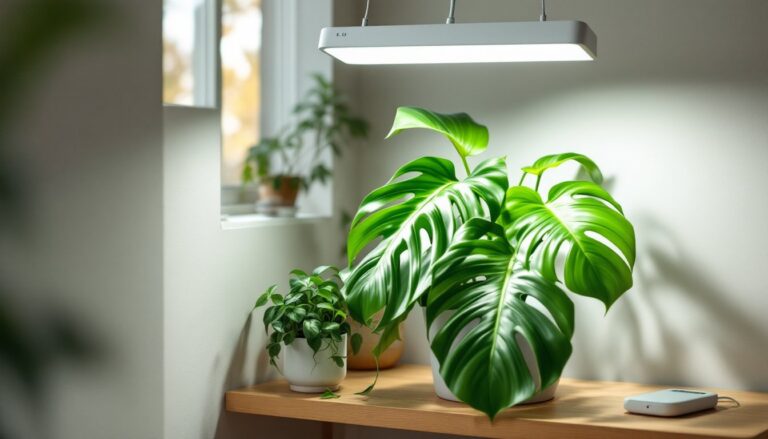
Seasonal Adjustments: Light levels shift with the seasons. A spot that’s perfect in June may be too dim by November. If you notice slowed growth or stretched stems in winter, move the plant closer to a window or supplement with a grow light bulb in a standard lamp fixture (look for bulbs labeled “full spectrum” with a Kelvin rating of 5000–6500K).
In summer, watch for sunburn if the sun’s angle changes. South-facing windows that were fine in March can scorch leaves by July. Sheer curtains, adjustable blinds, or simply shifting the plant a few feet back from the glass usually solve the problem without requiring a full relocation.
Many types of tropical plants benefit from a summer vacation outdoors in a shaded patio or covered porch, but acclimate them gradually, move them outside for a few hours at a time over the course of a week to prevent shock. Always bring them back indoors before nighttime temps drop below 55°F.