Tropical house plants don’t just sit there, they work. They scrub your indoor air, add humidity in dry winter months, and turn a plain corner into something worth looking at. In 2026, homeowners are ditching the fussy ferns and betting on bold, architectural tropicals that tolerate real-world conditions: dim apartments, sporadic watering, and the occasional HVAC blast. Whether you’re outfitting a sunny window or a cave-like basement office, there’s a tropical indoor plant that’ll thrive without a horticulture degree. This guide covers selection, environment setup, ongoing care, and design strategies that actually work in modern homes.
Table of Contents
ToggleKey Takeaways
- Tropical house plants improve indoor air quality by removing VOCs like formaldehyde and benzene, plus increase humidity naturally without requiring a humidifier.
- Beginner-friendly tropical indoor plants like pothos, snake plants, and Monstera deliciosa tolerate dim lighting, irregular watering, and neglect better than most houseplants.
- Consistency in temperature (60–80°F), bright indirect light (200–800 foot-candles depending on species), and 40–60% humidity creates the ideal environment without a greenhouse.
- Water tropical plants thoroughly when the top 1–2 inches of soil dry out, cut back watering by 30–50% in winter, and always use pots with drainage holes to prevent root rot.
- Use tropical house plants as design elements by anchoring tall varieties in corners, layering trailing plants on shelves, and clustering odd-numbered groupings for natural visual interest.
Why Tropical House Plants Are Perfect for Modern Homes
Tropical house plants evolved in humid, low-wind environments, which happens to match the interior of most homes. Unlike temperate species that need seasonal dormancy, indoor tropical plants grow year-round under stable temperatures, making them predictable roommates.
Air quality is the big draw. NASA’s Clean Air Study (still referenced in 2026) identified species like pothos and peace lilies as effective VOC scrubbers. One mature Monstera deliciosa can process formaldehyde from pressed-wood furniture, while Dracaena varieties tackle benzene from carpet adhesives.
Humidity regulation is a secondary benefit. Transpiration from large-leaf varieties like philodendrons can raise relative humidity by 5-10% in a 150-square-foot room, reducing static and dry skin without running a humidifier.
Aesthetic flexibility matters for DIYers who repaint or rearrange. Exotic house plants like bird of paradise or banana plants scale up to fill vertical space in open-concept layouts, while compact varieties (Calathea, Peperomia) suit shelving and countertops. Their year-round foliage means no seasonal swaps, plant it, enjoy it, done.
Low maintenance seals the deal. Most common tropical house plants tolerate weeks of neglect better than annuals or succulents that rot at the first overwatering. If you can maintain a thermostat between 60-80°F and water every 7-14 days, you’re 90% there.
Best Tropical House Plants for Beginners
Start with species that forgive mistakes. These five are nearly bulletproof:
Pothos (Epipremnum aureum): Trails up to 10 feet indoors, tolerates fluorescent office lighting, and roots in plain water if you forget to pot it. Variegated types (golden, marble queen) add visual interest. Water when the top 2 inches of soil dry out.
Snake Plant (Sansevieria trifasciata): Grows in anything from full sun to a closet with a 40-watt bulb. Waxy, upright leaves store moisture, so it survives month-long droughts. The “Black Gold” cultivar fits modern industrial decor.
Monstera deliciosa: The Instagram plant that actually lives up to the hype. Fenestrated (split) leaves develop after the first year. Needs a moss pole or trellis once it hits 3 feet. Thrives in bright indirect light but survives in medium light with slower growth.
ZZ Plant (Zamioculcas zamiifolia): Rhizomes store water underground, making it nearly unkillable. Glossy, dark green leaves don’t attract pests. Grows 2-3 feet tall in low to medium light. Only warning: all parts are toxic if ingested, so keep away from pets and kids.
Philodendron (heartleaf or Brasil): Vining or upright varieties both work. Heartleaf types cascade from hanging baskets: tree philodendrons stand upright to 6 feet. Both handle low light and irregular watering.
Low-Light Tropical Varieties
Not everyone has south-facing windows. These species thrive in north-facing rooms, hallways, or spaces more than 8 feet from a window:
Aglaonema (Chinese Evergreen): Patterned leaves in silver, red, or pink. Grows slowly to 2 feet. Tolerates fluorescent or LED shop lights. Water when soil is 50% dry.
Dracaena marginata: Thin, spiky leaves on woody stems. Reaches 6 feet indoors but grows slowly. NASA-rated for air purification. Prefers medium light but adapts to low.
Cast Iron Plant (Aspidistra elatior): Named for its toughness. Deep green, broad leaves. Survives in basements with minimal natural light. Water every 2-3 weeks.
Parlor Palm (Chamaedorea elegans): Compact palm (3-4 feet) that tolerates low light and low humidity. Water when top inch of soil dries. Non-toxic to pets.
These common tropical house plants adapt to real-world conditions without constant fussing.
Creating the Ideal Environment for Tropical Plants
Tropical plants don’t need a greenhouse, but they do need consistency. Here’s what to dial in:
Temperature: Keep it between 60-80°F. Avoid placement near heating vents, exterior doors, or drafty windows. A 10-degree swing day-to-night is fine: sudden 20-degree drops stress plants and cause leaf drop.
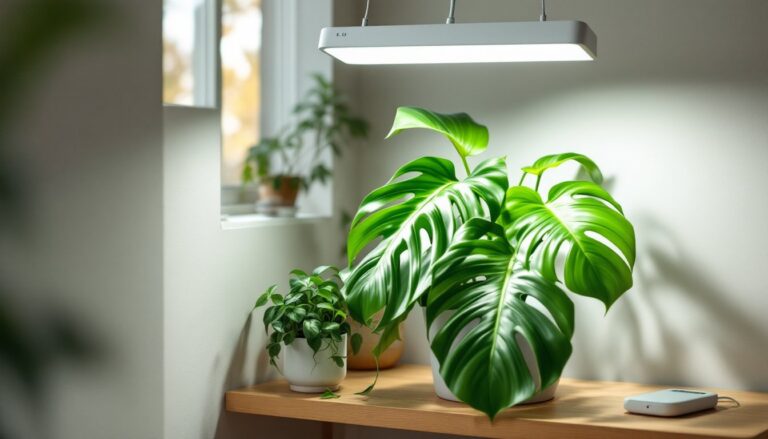
Light: Most tropicals want bright, indirect light, think 3-5 feet from an east or west window, or behind a sheer curtain on a south exposure. Use a light meter (or a smartphone lux app) to measure: 200-400 foot-candles suits low-light species, 400-800 for medium, 800+ for high-light varieties like fiddle-leaf figs. If natural light is weak, supplement with full-spectrum LED grow bulbs (5,000-6,500K color temperature) on a 12-14 hour timer.
Humidity: Aim for 40-60% relative humidity. Most homes sit at 30-40% in winter. Solutions that work:
- Pebble trays: Fill a shallow tray with gravel, add water to just below the gravel surface, set pots on top. Evaporation raises local humidity.
- Grouping plants: Cluster tropicals together: their combined transpiration creates a micro-climate.
- Room humidifiers: A 1-gallon cool-mist humidifier covers about 250 square feet. Clean the tank weekly to prevent mold.
Skip misting, it’s temporary (humidity spikes for 10 minutes, then drops) and promotes fungal issues on leaves.
Soil and drainage: Use a well-draining potting mix, standard indoor mix with added perlite or orchid bark (20-30% by volume). Tropicals hate wet feet. Pots must have drainage holes. Saucers are fine, but dump standing water after 15 minutes.
Containers: Terracotta breathes and dries faster (good for overwater-prone owners). Plastic or glazed ceramic retains moisture longer (better for forgetful waterers). Size up one pot diameter (2 inches) when repotting: oversized pots hold excess moisture and invite root rot.
According to Gardenista’s tropical plant guide, acclimating new plants gradually prevents shock, place them in their permanent spot and resist moving them around for the first month.
Essential Care and Maintenance Tips
Watering: Most tropical house plants follow the same rule: water thoroughly when the top 1-2 inches of soil dry out. Stick your finger in, if it’s damp, wait. When you water, drench until water runs from the drainage holes, then empty the saucer. Frequency varies by season, pot size, and light level. In winter, plants drink less: cut back by 30-50%.
Fertilizing: Feed during active growth (spring through early fall). Use a balanced liquid fertilizer (10-10-10 or 20-20-20) diluted to half-strength every 4 weeks. Slow-release granules work too, apply once in spring. Skip fertilizer in winter: plants aren’t growing much and excess salts build up.
Cleaning: Dust blocks light and clogs stomata. Wipe large leaves monthly with a damp microfiber cloth. For smaller-leafed plants, rinse in the shower (room-temp water, low pressure) every 6-8 weeks.
Pruning: Trim dead or yellowing leaves at the base with clean bypass pruners. Sterilize blades with rubbing alcohol between plants to prevent disease spread. Pinch back leggy growth to encourage bushier form.
Pest control: Watch for spider mites (fine webbing, stippled leaves), mealybugs (white cottony clusters), and scale (brown bumps on stems). Treat early with insecticidal soap or neem oil spray. Quarantine new plants for 2 weeks before introducing them to your collection.
Repotting: Most tropicals need fresh soil every 18-24 months. Signs to repot: roots circling the drainage hole, water running straight through without absorbing, or top-heavy plants tipping over. Repot in spring. Loosen root-bound balls gently, don’t rip them apart.
For deeper care strategies, The Spruce offers troubleshooting guides that cover nutrient deficiencies and recovery from overwatering.
Decorating with Tropical House Plants: Design Ideas That Work
Tropicals aren’t just green blobs, they’re structural elements. Use them like furniture:
Vertical anchors: Large floor plants (fiddle-leaf fig, bird of paradise, rubber tree) fill empty corners and balance tall ceilings. Place them in 10-14 inch diameter pots with a pot stand or dolly for mobility. In open-concept spaces, a row of tall tropicals creates a living room divider without blocking light.
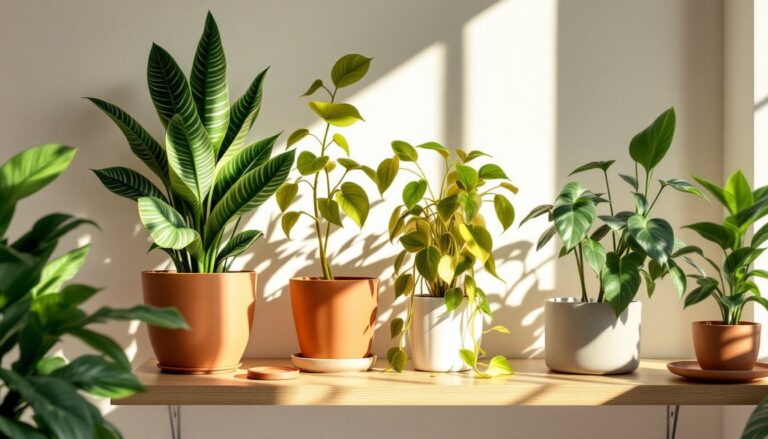
Shelving layers: Trailing pothos or philodendron soften hard edges on open shelving. Mount floating shelves at staggered heights (12-18 inches apart) to create a vertical garden on a blank wall. Mix in broad-leaf varieties for textural contrast.
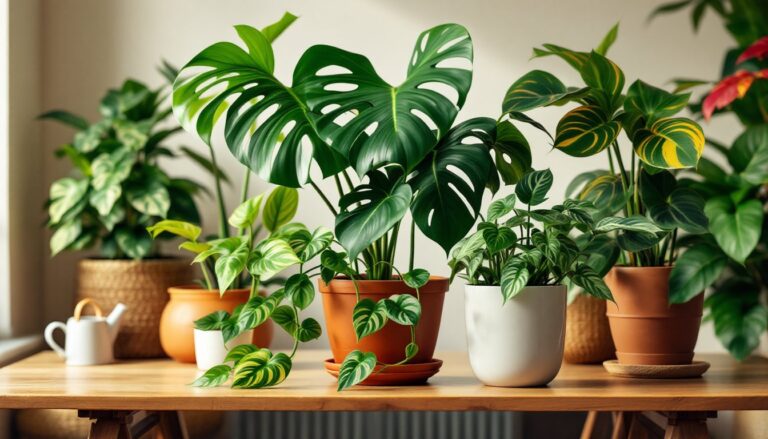
Statement clusters: Group 3-5 plants of varying heights and leaf shapes on a plant stand or side table. Pair upright snake plants with trailing pothos and mid-height Calathea for visual interest. Odd-numbered groupings look more natural than pairs.
Bathroom tropicals: High humidity makes bathrooms ideal for ferns, orchids, and prayer plants. If you have a window, you’re set. No window? Install a full-spectrum LED bulb (15W minimum) in the vanity fixture.
Hanging planters: Use ceiling joists (not drywall anchors) to support macramé or metal hangers. Locate joists with a stud finder, drill pilot holes, and install screw-in hooks rated for 20+ lbs. Hang at eye level or higher to keep floor space open.
Kitchen counters: Compact tropicals like Peperomia or small Philodendron ‘Brasil’ fit near sinks where they’ll benefit from ambient moisture. Keep them at least 18 inches from gas ranges to avoid heat stress.
Color coordination: Match pot finishes to your existing palette. Matte black or white ceramic suits modern/minimalist homes. Terracotta or woven baskets fit farmhouse or boho styles. Metallics (brass, copper) work in mid-century or industrial settings.
Design resources like Better Homes & Gardens regularly feature room layouts that integrate types of tropical plants into functional decor without sacrificing usable space.
Conclusion
Tropical house plants deliver measurable benefits, cleaner air, stable humidity, and year-round greenery, without the upkeep of a traditional garden. Start with beginner-friendly varieties, dial in light and watering, and scale up as you learn what works in your space. The barrier to entry is low: a $15 pothos and a south-facing window will teach you more than any article. If it thrives, add more. If it struggles, adjust one variable at a time. Treat it like any DIY project: measure twice, water once, and don’t overthink it.